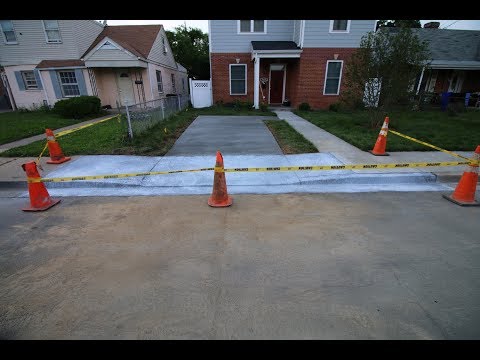

Concrete & Paver Driveway Replacement in Arlington
If you are searching for the best driveway contractors in Arlington, VA, you are likely facing a unique set of challenges. You don't just want a beautiful new concrete driveway replacement or a luxury paver driveway installation; you want to solve a parking crisis. Most Arlington homes in North Arlington, Clarendon, and Cherrydale were built in the 1940s with narrow, single-car driveways that simply don't fit modern life.
You want to execute an asphalt to concrete driveway conversion to fit two cars side-by-side and effectively add off-street parking, but you are stuck navigating strict County Zoning laws. This is not a DIY project. In Arlington, replacing or widening a driveway involves cutting the public curb, modifying the apron in the Right-of-Way, and navigating tight "Impervious Surface" limits. Tuck GC is Arlington's premier design-build contractor. We specialize in luxury driveway installation and navigating DES regulations to legally expand your entrance.
Arlington Driveway Widening Master-Class
Navigating DES Right-of-Way Permits to Engineer a Flawless Techo-Bloc & Marble Estate.
Phase 1: The 17-Foot Curb Cut Expansion
- The Arlington Restriction: Arlington County enforces notoriously strict zoning laws, utilizing the Department of Environmental Services (DES) to limit driveway aprons to a maximum width of 17 feet.
- The Parking Victory: We successfully secured the required Excavation Right-of-Way (ROW) permits to execute the maximum allowable curb cut expansion, dramatically improving the home's off-street parking.
- The Paving System: We removed a ruined, gravel-like asphalt strip and excavated deep. Everything was built on a 6-inch aggregate foundation topped with a structural concrete base. For the driveway surface, we utilized premium Techo-Bloc Blu 80 pavers (Smooth HD2 finish in Champlain Grey).
Phase 2: Hydrology & Drainage
- The Threat: The original driveway sloped heavily down the right side of the house. Arlington properties sit incredibly close together, and neighboring lots were already fighting severe water problems. The last thing we wanted to do was flood their yards with runoff from a widened driveway.
- The Solution: We engineered a total grading correction. From the house foundation forward, we leveled the driveway left-to-right, forcing all front water to safely exit into the street. Down the side of the house, we built up a structural walkway alongside a newly incorporated landscape bed to absorb runoff. Finally, we pitched the side walkway at a precise 2% slope to dissipate water harmlessly into the grass, while tying every downspout into a massive rear river-rock drainage basin.
Phase 3: Tundra Gray Marble & Structural Masonry
- The Front Entrance: The client originally wanted a traditional "Arlington Flagstone" look until they saw our Tundra Gray Marble. This thermal-treated, slip-resistant stone offers a spectacular modern aesthetic. We set the walkway stones tight together with zero grout joints, allowing a beautiful natural patina to form over time. A 4-foot connector pathway seamlessly bridges the marble walkway to the Techo-Bloc driveway.
- The Stoop & Walls: The original front porch was crumbling. We demoed it completely to the footer and rebuilt a bulletproof concrete block, rebar-reinforced core. The stoop was then veneered in Tundra Gray Marble and capped with massive 2-inch premium thermal Bluestone treads. To tie the estate together, we utilized Ledge Cut Stonington Ashlar for all vertical retaining walls, engineering the front planter wall to perfectly match the height of the first porch step.
The Tuck Standard: Turning a Problem into a Design Feature
When we moved to the rear of the property, we encountered a grading issue left behind by the home's original builder. The foundation and deck steps dropped much deeper into the earth than the new grade allowed. Instead of forcing the client to rip apart and rebuild their entire deck staircase, we engineered a custom solution. We created a gorgeous, subterranean landing at the bottom of the stairs, perfectly level with the bottom step. We wrapped the entire landing in a structural retaining wall equipped with a dedicated grate drain box. This didn't just solve the grading issue; it created a highly unique, four-sided "step-up" architectural feature that looks like a deliberate luxury design element.
Arlington Driveway Permit Requirements: What You Need to Know
If you are asking, "Do I need a permit to widen my driveway in Arlington, VA?" The answer requires a bit of technical honesty. If you search for Arlington County permit rules, you will usually just find confusing government PDF documents. Here is the straightforward truth:
- Private Driveways & Zoning: Do you need a permit just to replace the private driveway on your property? Technically, no building permit is required unless your project disturbs more than 2,500 square feet of land (which triggers a Land Disturbing Activity permit). However, even without a permit, you must strictly adhere to the lot coverage guidelines set by Arlington County Zoning. To protect you, Tuck GC performs a comprehensive zoning check before we dig to ensure your new driveway won't push your property over its maximum impervious surface limit.
- The Apron Extension Reality: If you are widening your driveway to fit two cars, you logically need to widen the entrance so you can actually pull them in. The second you touch the apron or the curb, you absolutely must secure a Department of Environmental Services (DES) Right-of-Way Permit and post a municipal bond.
- The Tuck GC Permit Advantage: We do not expect you to navigate the Arlington County Permit Office alone. As a licensed Class A contractor, we draft the site plans, calculate your lot coverage, pull the DES Right-of-Way permits, and handle all municipal inspections to ensure your expansion is 100% legal.
The $5,000 "Impossible" Save
The Problem: Arlington County strictly forbids water meters in the driveway apron. Standard rules would have forced the homeowner to pay nearly $7,000 to hire a plumber, dig up the yard, and relocate the main water line just to pour the driveway.
The Tuck Solution: We didn't accept the first "No." We leveraged our Class A credentials to secure an on-site meeting with the Chief Engineering Inspector. We proposed installing a traffic-rated A.Y. McDonald frame and cover, which is rated for heavy vehicle loads.
The Execution: We excavated around the existing meter crock and built a reinforced custom masonry tray with rebar collars to anchor the casting flush with the new concrete finish. It passed inspection on the first try, saving the client thousands in unnecessary plumbing costs.

The Rules of Expansion: How We Maximize Space
Arlington County has some of the strictest zoning codes in Northern Virginia. Expanding a driveway is not as simple as pouring more concrete. You must adhere to two critical constraints: The Curb Cut Limit and Impervious Surface Coverage.
The "Flare-Out" Strategy
The Rule: Arlington County typically limits the public apron width (the cut at the street) to 17 feet for single-family homes.
The Solution: While the apron stays at 17 feet, we design a tapered flare immediately behind the public sidewalk. This allows your private driveway to open up to 20 feet or more, providing comfortable side-by-side parking for two SUVs while staying perfectly compliant with County DES specs.
Impervious Surface Coverage (Lot Coverage)
The Limit: Most residential zones in Arlington (R-5, R-6) cap total lot coverage (house + driveway + patio) at around 30-45%. If you exceed this, the permit is denied.
The Workaround: We perform the coverage calculations before we dig. If you are near the limit, we utilize Permeable Paver Driveways in Arlington VA for the expansion. These engineered pervious systems count differently in the zoning calculation, allowing you to get the extra width you need without violating the environmental code.
🌳 The "Hidden" Obstacle: Urban Forestry
In Arlington, street trees are protected assets. If your driveway widening encroaches on the Critical Root Zone (CRZ) of a county tree, your permit will be rejected. Tuck GC works directly with the Urban Forester to establish tree protection plans, utilizing Air-Spading (excavation with compressed air) to expose roots safely without damaging them, ensuring your project gets approved where others fail.
Common Questions: Driveways, Aprons & Permits
Can I widen my driveway myself?
No. Any modification to the curb cut or width of the apron occurs in the Public Right-of-Way. Only a licensed contractor with a Class A RBC designation (like Tuck GC) can legally pull the curb cut permit, bond the project, and pour this concrete.
Asphalt vs. Concrete?
Many Arlington homeowners replace old asphalt with concrete for lighter heat absorption (urban heat island effect) and better curb appeal. Concrete driveways typically last 30+ years with minimal maintenance compared to asphalt seal-coating.
The "Big Three" Approved Arlington DES Designs
1. Standard Entrance (R-2.4A)
The Baseline Standard. Used when you have a standard utility strip and typical curb height.
- Design: Continuous curb & gutter with a 1-inch flow line lip.
- Specs: 6" concrete thickness over 6" aggregate base.
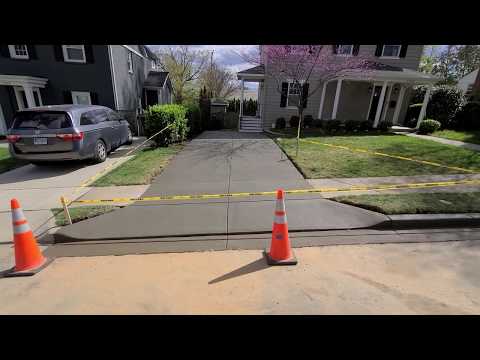
2. Depressed Entrance (R-2.4B)
For Steep & Narrow Conditions. This design lowers the entry point to prevent your car's bumper from scraping.
- Usage Trigger: Required when Utility Strip is < 2.5 feet AND slope is > 12%.
- Design: The curb is "depressed" deep into the grade.
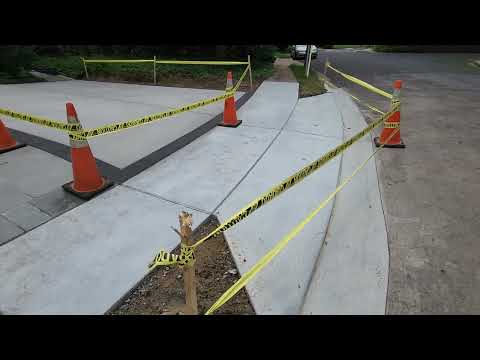
3. Mountable Curb (R-2.4C)
The "Rolled Curb" Style. Designed for tight right-of-ways where standard A and B details simply won't fit.
- Usage Trigger: Strictly for when there is NO Utility Strip present.
- Design: A smoother, rolled mountable curb profile.