
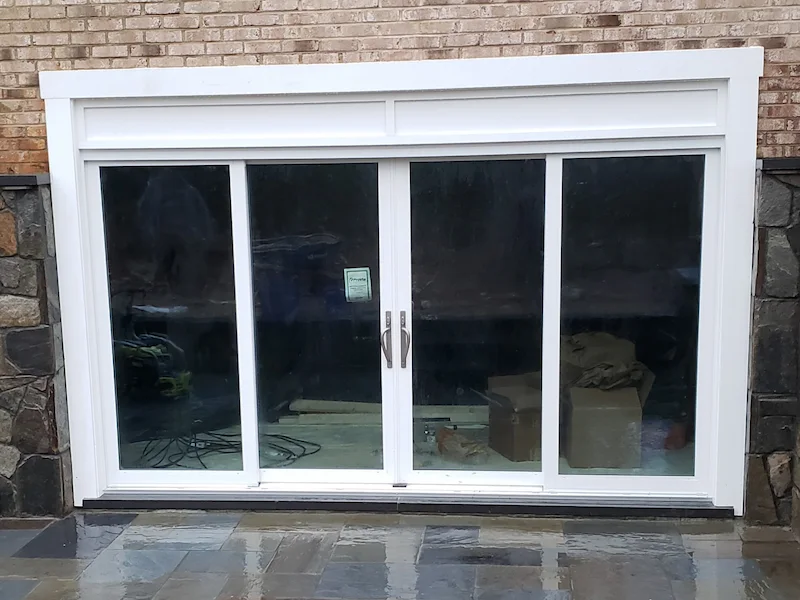
Structural Masonry Alterations
You do not have to live with the floorplan the original builder gave you. If you are building a new deck and need to convert an existing window into a sliding glass door, or if you want to expand a single rear door into massive double French doors to let in more light, Tuck GC can execute the structural modifications. We specialize in cutting new above-grade openings into solid brick, cinder block, stone veneer, and traditional wood-framed siding.
Unlike standard carpenters or window replacement companies who simply swap glass into existing holes, we are a Class A Contractor specializing in structural masonry. In the historic masonry homes of Alexandria and the sprawling brick colonials of Fairfax and McLean, altering an exterior wall requires significant load-bearing engineering. We manage the entire process—from temporarily shoring the roof load to installing engineered steel lintels—ensuring the new opening is perfectly plumb, watertight, and structurally uncompromised.
1. The Diagnostic: The Danger of Un-Supported Cuts
An exterior wall is a load-bearing structure. It carries the immense weight of the second floor and the roof system down to the foundation. When amateur contractors cut a new hole in an exterior wall—especially a masonry wall—without understanding load paths, the results are catastrophic. If a proper header or steel lintel is not installed above the new opening, the weight of the house will crush downward.
Within months, the new door will begin to bind and stick. The drywall inside the home will crack diagonally from the corners of the frame. In brick homes across Arlington and Falls Church, the masonry above the new door will begin to step-crack and sag, eventually leading to structural collapse. Creating a new opening is not a job for a handyman with a reciprocating saw; it requires absolute structural engineering.
2. The Tuck Standard Protocol: Structural Modification
Whether we are dropping a window sill down to the floor to create a single entry door, or blowing out a 12-foot section of brick to install a massive multi-slide patio door, our protocol ensures zero deflection in your home’s framing:
- Temporary Shoring & Load Transfer Before a single brick is removed, we construct temporary load-bearing support walls (shoring) on the inside of the home. This catches the weight of the floor joists and roof trusses above the work area, transferring the load safely to the floor while the exterior wall is modified.
- Precision Masonry & Frame Cutting Using specialized, water-cooled diamond masonry saws, we cut clean, perfectly straight lines through the exterior brick, block, or stone. We do not use sledgehammers, which shatter adjacent brickwork and destroy the structural bond of the surrounding masonry.
- The Structural Header (LVL & Steel) Once the opening is cleared, we immediately install the new structural header. For wood-framed walls, we utilize engineered Glued Laminated Timber (LVL) beams. For brick and masonry homes, we install heavy-duty steel lintels (L-beams) bolted directly into the framing. These headers bridge the gap, carrying the massive weight of the house above the new door or window.
- Watertight Integration (Sill Pans & Flashing) A new opening is a new opportunity for water intrusion. We construct custom, sloped sill pans at the base of the opening and apply commercial-grade, self-adhering flashing tape (like Zip System) around the entire perimeter. We then custom-bend aluminum drip caps to sit directly above the new door or window, ensuring rain sheets off the facade.
- Masonry Tooth-In & Trim Finishing We do not leave ugly, mortar-smeared scars on your house. Our master masons "tooth-in" replacement bricks around the edges of the new cut, utilizing matching mortar to blend the repair seamlessly into the existing wall. For sided homes, we re-weave the siding and wrap the new opening in rot-proof Cellular PVC trim for a pristine, finished aesthetic.
3. Material Science: Structural Support Systems
| Header Type | Material Composition | Load Capacity | Application Usage |
|---|---|---|---|
| Steel Lintel (L-Beam) | Heavy-gauge forged steel angle. | Extreme. Supports the weight of masonry. | Required for all brick and stone veneer wall cuts. |
| LVL (Engineered Wood) | Multiple layers of thin wood assembled with adhesives. | Massive. Far stronger than solid lumber. | Wood-framed homes with vinyl, fiber-cement, or wood siding. |
| Standard Lumber (2x10s) | Basic dimensional pine. | Moderate. Prone to bowing over wide spans. | Used only for very small window openings; rarely for doors. |
4. The Northern VA Factor: Brick Colonials and Permitting
Northern Virginia is dominated by brick colonial architecture, especially in established neighborhoods across Burke, Springfield, and Vienna. Altering these facades is highly technical. When converting a standard window into a patio door, we must cut downward through the existing brick water table and foundation block to reach floor level. This requires expert masonry skills to ensure the remaining brickwork does not unravel. Tuck GC has the in-house masonry expertise to execute these modifications flawlessly without needing to hire outside subcontractors.
Furthermore, in Fairfax County, Prince William County, and Loudoun County, altering the size of an exterior opening or modifying a load-bearing wall strictly requires a building permit. You cannot legally expand a door without an inspector verifying the structural header sizing. Tuck GC handles the entire permitting process, drafting the architectural elevations and structural load calculations required to secure the permit and ensure your home remains 100% legal and insurable.
5. Door & Window Modification FAQ
Yes. This requires widening the rough opening. We must remove the siding or brick on either side of the existing door, remove the original header, install temporary shoring, and set a much wider, heavier engineered LVL beam or steel lintel to span the new, wider opening safely.
Converting an existing window into a door is almost always cheaper and faster. If the new door is exactly the same width as the existing window, the structural header above the window is already in place. We simply remove the window, cut the wall structure downward to the floor, and drop the new door in. Cutting a completely new hole requires engineering and installing a new header from scratch.
Yes. Creating a new opening is a full interior/exterior process. We frame the new opening, install the door, and then our interior crews hang new drywall, tape, mud, and install interior casing (trim) to match your existing baseboards and moulding.
6. Change Your Perspective
Do not let the original floorplan trap you. Whether you are opening up your kitchen to a new custom deck in Woodbridge or adding panoramic windows to a dark living room in Reston, Tuck GC delivers heavy-civil structural modifications with surgical precision. Expand your light, improve your flow, and alter your architecture safely.