
Structural Hardscaping in Fairfax, McLean & Alexandria
Tuck GC is a Class A design-build hardscape contractor serving Fairfax, Arlington, Alexandria, and the estate communities of McLean and Great Falls. We build patios as permanent masonry — stone and pavers wet-set on a steel-reinforced concrete slab — rather than as landscaping dropped on a bed of sand. That distinction is what separates a surface that stays flat for decades from one that heaves and shifts after its first Northern Virginia winter.
This page is the starting point for that work: flagstone, bluestone, travertine, and engineered pavers; fire pits, seating and planter walls, walkways, drainage, and turf — all engineered for our region's Marine Clay soil and freeze-thaw cycles. Below we explain how each material performs, how to choose between them, and the zoning and grading factors specific to NoVA lots, then link you into the right surface for your home.
Hardscape & Driveway Master-Class Case Study
The Ultimate Property Transformation: From Failing Asphalt to an Engineered Hardscape & Drainage Oasis.
Phase 1: 2,000 Sq. Ft. Driveway & Apron
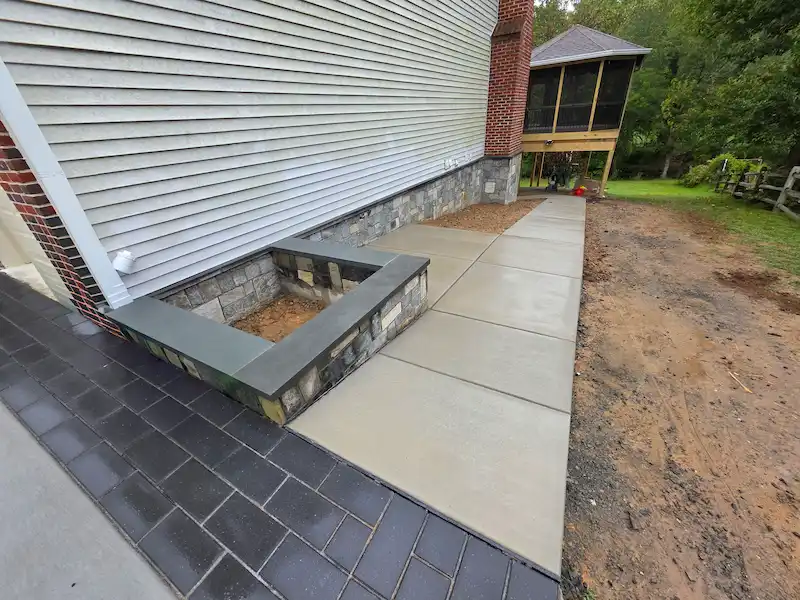
- The Foundation: We tore out a ruined, half-gravel asphalt driveway and replaced it with an engineered concrete system, starting at the street with a custom concrete apron and an integrated drainage culvert.
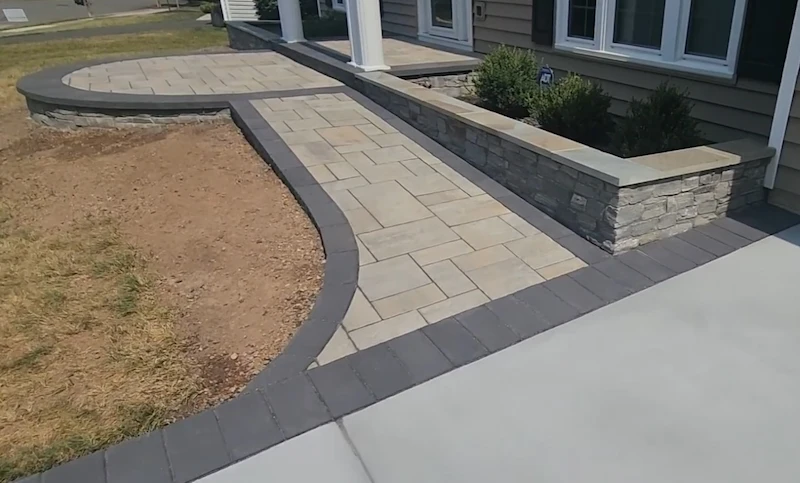
- The Bordering: To sharpen the design and frame the slab, we wrapped the entire parking area in a premium Techo-Bloc paver border.
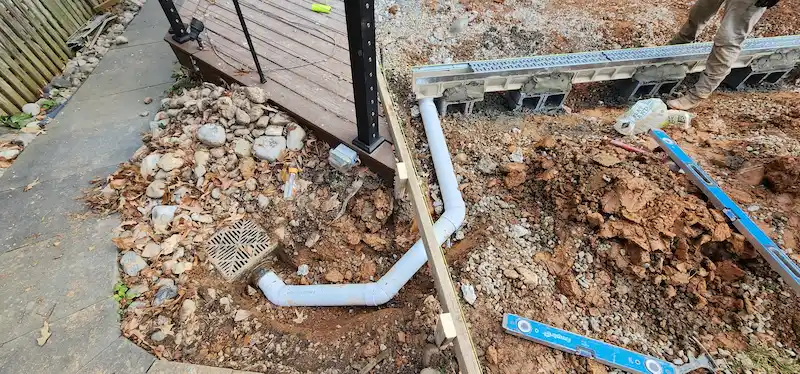
- Erosion Control: A 2,000-square-foot driveway sheds a lot of water. To prevent erosion, we installed decorative river rock edging and drainage beds around the lower apron to diffuse the runoff safely.
Phase 2: Heavy Civil Drainage
- The Problem: The entire front yard was sloping heavily toward the house and driveway, threatening severe water damage to the foundation.
- The Solution: We built a structural retaining/seating wall wrapping the project. Hidden directly behind it is a high-capacity French drain — topped with river rock — that catches hillside runoff, ties into every downspout, and carries water out to the street.
Phase 3: Multi-Tiered Flagstone Entryway
- Grade Correction: The home’s original front porch deck was improperly built below grade, leaving the wood steps sitting directly in the dirt to rot. We excavated the entire front yard down over 12 inches to expose the wood, correct the grading, and permanently save the structure from premature failure.
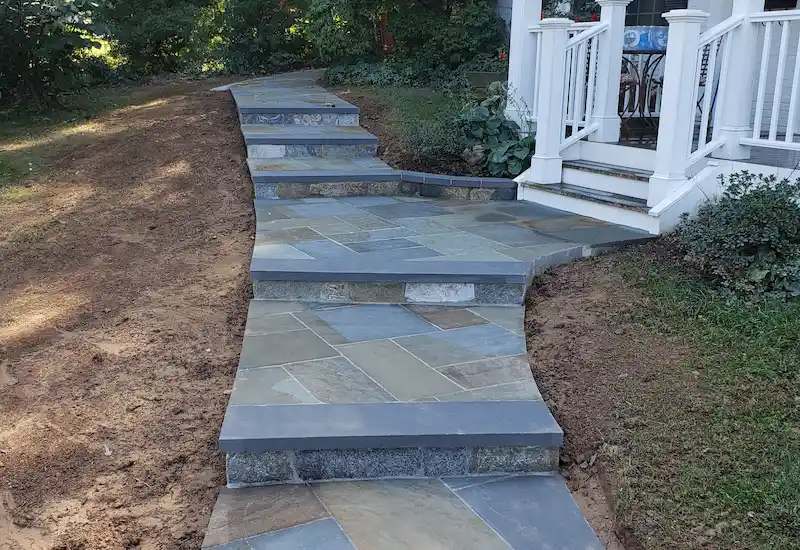
- The Patio: The 12-inch excavation opened room for a two-tiered flagstone patio. It replaced a failing 10x10 dry-set sand patio with a multi-level entryway and entertainment space, accented by custom low-voltage landscape lighting.
The Structural Marvel: Garage Foundation Rebuild
During the driveway excavation, we uncovered a structural flaw: the garage foundation did not line up with the house, leaving a jagged concrete edge, and its load-bearing corners were failing. Rather than cover it up, we halted the hardscape, brought in our masonry team, and rebuilt the structural corners of the foundation to carry the load. We then spent a full day precision-cutting the old concrete so the new pavers would tuck cleanly under the garage doors, and wrapped the repaired foundation in custom stone veneer — a fix that joins structural repair to the finished design.
Explore Our Hardscape Services
Each surface and structure below has its own deep-dive page covering materials, process, and how it performs in our Fairfax, Arlington, and Alexandria conditions. Start with the one that fits your project:
The Science of the Wet-Set (Why "Sand-Set" Fails)
Wet-set vs dry-laid is the most important decision in patio construction, and most installers in Burke and Springfield default to dry-laid: stone or pavers dropped on a bed of sand or stone dust. In Northern Virginia's expansive Marine Clay, that base holds water and moves. The clay swells when wet and contracts when dry, freeze-thaw lifts the saturated sand, ants mine through the joints, and weeds take hold — so the surface goes uneven within a season or two. A dry-laid patio is not built on a foundation; it floats on the very soil that causes the problem.
The Tuck Standard (The 30-Year Build):
- 1. Over-Excavation & Aggregate: We dig deep into the expansive clay and install a heavy, compacted #57 stone base for advanced drainage.
- 2. The Concrete Slab: We pour a 4-inch, steel-reinforced 4000 PSI structural concrete foundation. This "bridge" prevents the patio from ever sinking or heaving individually.
- 3. The Mortar Bed: We cement the Flagstone or Travertine directly to the concrete using Type S mortar.
- 4. Grouted Joints: We use masonry grout, sealing the surface 100% against water infiltration and insect mining.
Tailored Solutions for Your Zoning
1. The Urban Courtyard (Alexandria & Arlington)
In Old Town, Del Ray, and North Arlington, space is the constraint and every square foot has to earn its place. We design compact hardscapes that get full usability out of a tight urban lot while staying inside the municipal zoning and setback rules that govern small parcels.
We utilize Seating Walls (20-inch high masonry walls) to provide permanent seating for guests without cluttering your floor plan with bulky furniture. We integrate vertical Planter Walls to add greenery without sacrificing square footage. Crucially, we understand the strict Impervious Surface Lot Coverage limits in Arlington and can design permeable paver systems that satisfy county code while delivering a luxury finish.
2. The Estate Terrace (Great Falls & Clifton)
For our clients in Great Falls, Clifton, and Fairfax Station, the challenge is scale and topography. Large lots often come with steep, unusable slopes. Instead of installing a harsh, industrial retaining wall, we design sprawling Multi-Level Terraces using structural segmental retaining blocks disguised by premium stone veneer.
A typical layout puts a dining patio off the kitchen, then steps down wide stone treads to a lower lounge tier with a custom outdoor kitchen, a structural pavilion, or a travertine pool deck. We handle the master planning that keeps the tiers flowing as one space, and manage the heavy excavation and cut-and-fill grading that turns an unusable slope into the defining feature of the property.
Patio Material Selection: A Quick Guide
Choosing the right stone is about more than color; it's about thermodynamics, grip, and longevity. We do it all — every major engineered line (Techo-Bloc, Belgard, EP Henry, Cambridge, Nicolock, Unilock, and Hanover), clay brick pavers from Pine Hall Brick and Glen-Gery, and all natural stone (PA flagstone, bluestone, travertine, and marble) — plus any premium product you spec.
PA Flagstone (Bluestone)
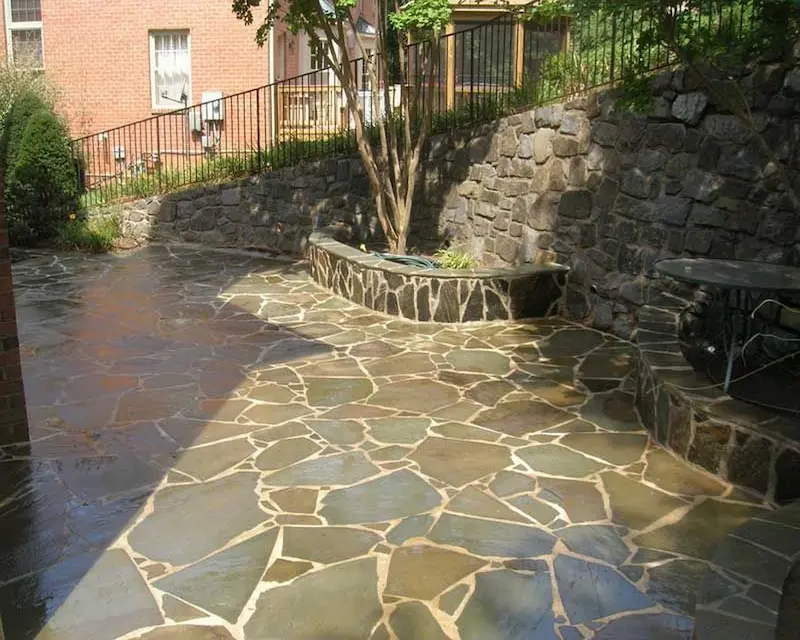
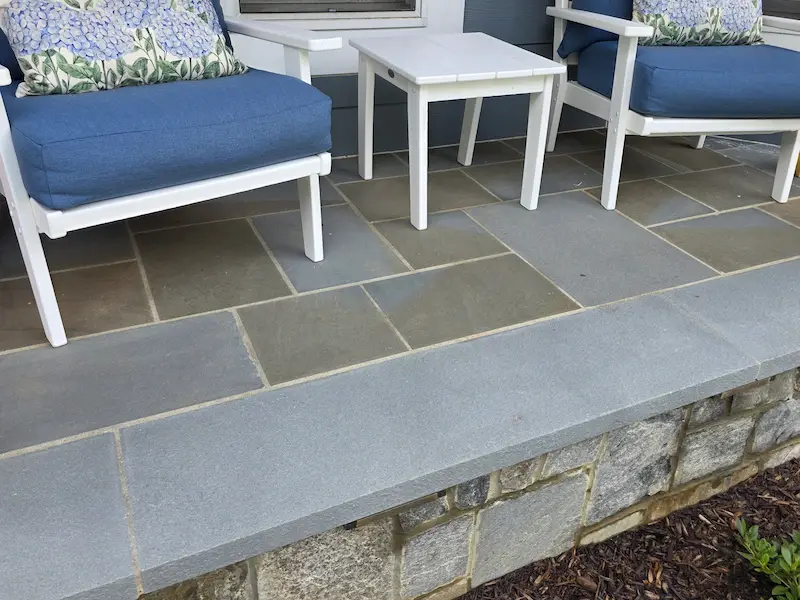
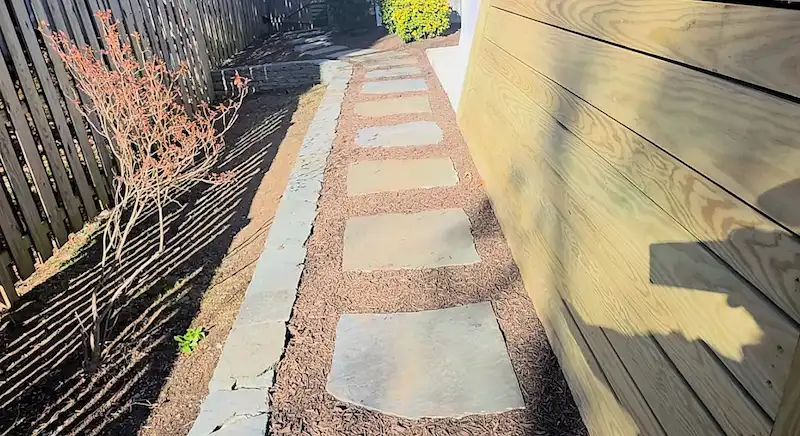
The "Classic" Look. Sourced from Pennsylvania and New York. This dense sandstone offers a historic aesthetic perfect for traditional homes in Fairfax Station and Falls Church. Available in "Thermal" (smooth) or "Natural Cleft" (textured) finishes.
Travertine & Marble
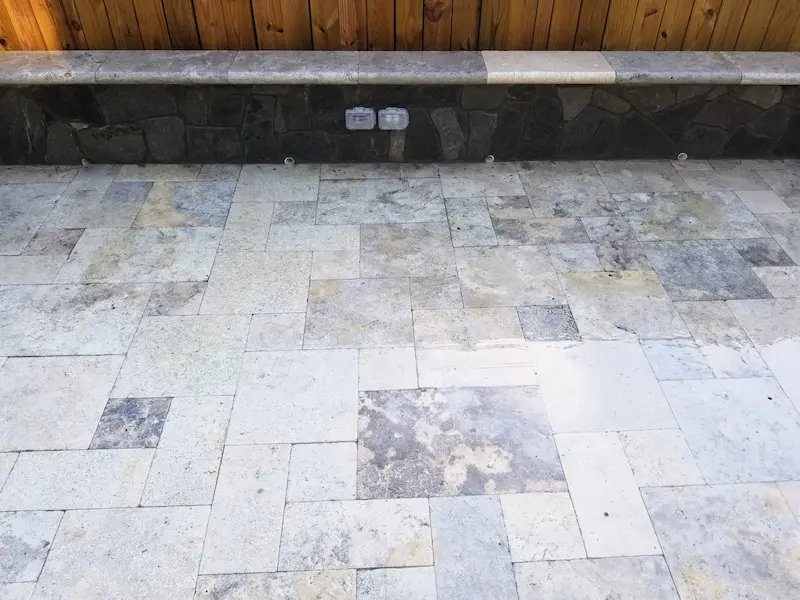
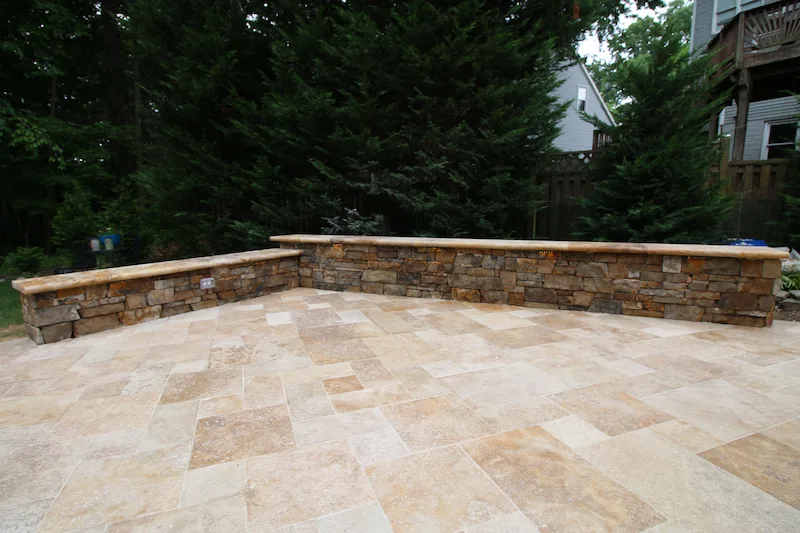
The Cool-Touch Stone. Travertine is a sedimentary limestone that reflects rather than absorbs heat, so it stays noticeably cooler underfoot than dark stone or pavers in full sun — a popular choice for pool decks and coping in Great Falls and McLean. We finish it tumbled or brushed and wet-set it on a concrete base so it lies flat and trip-free.
Engineered Pavers (Techo-Bloc & More)
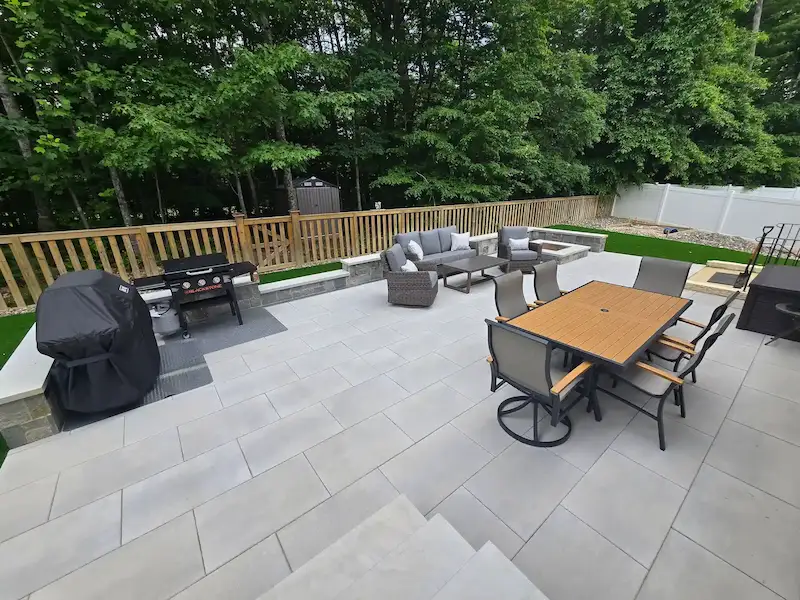
The Engineered Solution. For families in Manassas and Gainesville with heavy foot traffic, pets, and salt exposure, modern architectural pavers offer incredible durability. Techo-Bloc is our go-to, but we install Belgard, EP Henry, Cambridge, Nicolock, Unilock, and Hanover too — so if you're weighing EP Henry vs Techo-Bloc, we'll compare them honestly. All are highly salt-resistant and geometrically perfect.
Custom Fire Pits & Outdoor Living Rooms
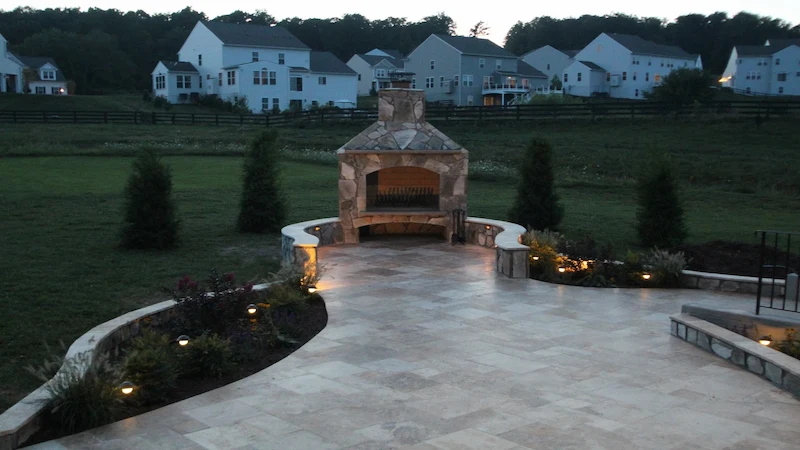
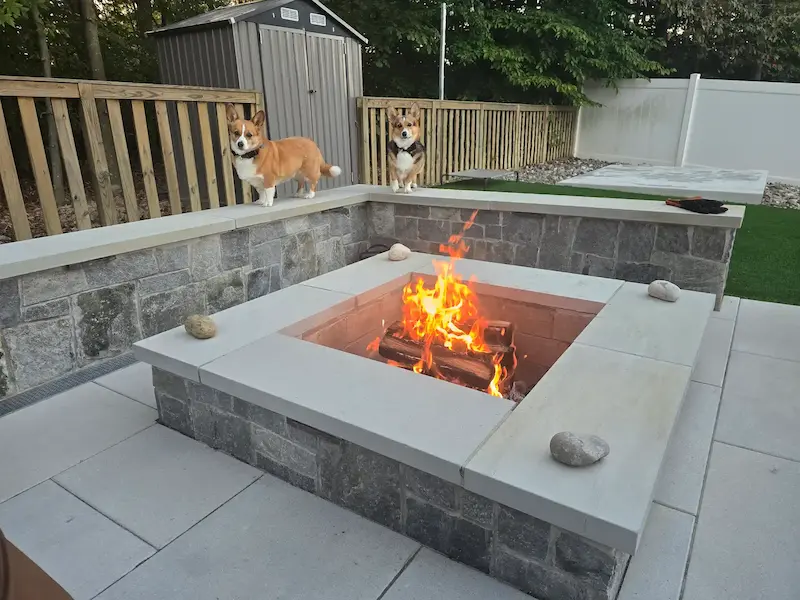
A patio is just a floor; the vertical elements create the "room." We design custom stone fire pits and gathering spaces that serve as the focal point of your backyard, extending your outdoor entertaining season well into November.
- Gas Fire Tables: We coordinate the gas line trenching and plumbing connection for push-button luxury. No smoke, no mess—perfect for townhomes and covered pavilions.
- Wood Burning Pits: Built with high-heat fire-brick interiors and natural stone veneer exteriors for the authentic campfire experience.
- Outdoor Kitchens & Bars: From built-in grill islands to full bar stations with refrigerators, we manage the structural framework and veneer matching.
Hardscaping Discovery Questions
Having pictures, property surveys, and drawings of what you want is incredibly helpful! Consider these factors:
- Typical gathering size and seating area capacity?
- Night-time entertaining and low-voltage lighting needs?
- Built-in grills, smokers, or masonry fire pits?
- Electrical requirements for heaters or outdoor TVs?
- Synthetic Turf borders for pets and cleanliness?
- Covered pavilions or screened-in space requirements?
- Property line setbacks and HOA restrictions?
The Range of Patios We Build
Durable & Functional
Professional structural concrete patio installations focusing on durability and clean functionality.
Premium Materials
Natural stone or premium Techo-Bloc pavers wet-set directly on a reinforced concrete base.
Multi-Zone Luxury
Multi-zone luxury hardscaping including custom seating walls, outdoor kitchens, and integrated lighting.
Full Property Oasis
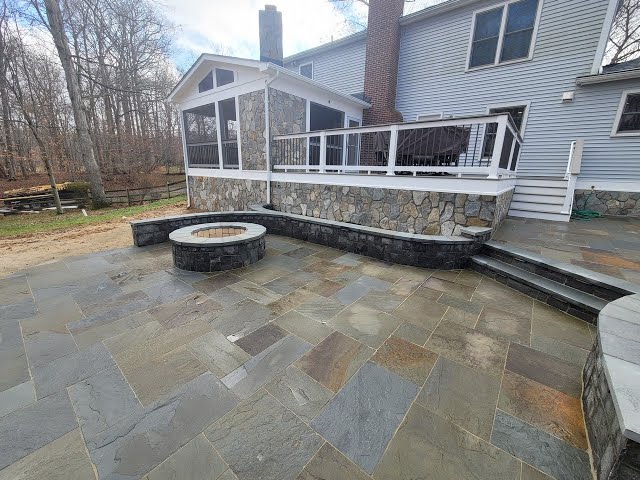
Turnkey masonry and carpentry integration creating a complete property oasis. Features pavilions, structural fire pits, and massive retaining walls.
Additional Project Walkthroughs
Choosing Your Patio Surface: Material, Maintenance & Cost by Stone Type
Every surface below is built the same structural way — wet-set on a steel-reinforced concrete slab, not dropped on sand — so the choice is about look, climate exposure, and upkeep, not whether it will last. Compare the main options across our Northern Virginia freeze-thaw and Marine Clay conditions, then deep-link into the surface that fits your home. For real numbers on your project, tell us your scope.
| Surface | Freeze-Thaw / Marine-Clay Durability | Cool-Touch & Slip (Pool Decks) | Sealing & Maintenance Cadence | Relative Cost Tier |
|---|---|---|---|---|
| PA Flagstone / Bluestone | Excellent when wet-set on a structural slab; dense natural sandstone that shrugs off our freeze-thaw cycles. | Natural-cleft finish grips well wet; darker tones run warmer in full sun than travertine. | Penetrating sealer roughly every 2–3 years to resist staining; otherwise sweep and rinse. | Mid |
| Travertine & Marble | Excellent wet-set; a tumbled travertine handles freeze-thaw well and reads as a true luxury stone. | Stays cool underfoot in direct sun; a tumbled or brushed finish, wet-set flat, makes it a popular pool-deck stone. | Penetrating sealer every 2–3 years; a touch more attention near pool chemistry and salt. | High |
| Engineered Pavers (Techo-Bloc, Belgard, EP Henry, Cambridge, Nicolock, Unilock, Hanover) | Excellent and the most salt-resistant; engineered units are geometrically perfect and built for heavy traffic. | Textured surfaces give good wet grip; lighter color blends run cooler than dark stone in sun. | Lowest upkeep — occasional rinse and a periodic sealer refresh; individual units can be lifted and reset. | Low–Mid |
Whichever surface you choose, it sits on the same Tuck wet-set foundation: over-excavated #57 stone, a 4-inch steel-reinforced 4000 PSI structural concrete slab, the stone mortared down with Type S mortar, and grouted joints sealed against water and insects. That structural method — not the stone on top — is what keeps every one of these patios flat through our Marine Clay and freeze-thaw winters. Pricing varies by stone, size, and site, so we route every quote through the contact page rather than post per-square-foot figures.
Patios & Hardscapes FAQ
How much does a patio cost in Northern Virginia?
Cost is driven by size, the stone or paver you choose, site access, demolition of any old surface, grade and drainage work, and add-ons like fire pits, seating walls, or lighting — so we quote every patio individually rather than post a misleading per-square-foot number. We're a structural, design-build hardscape contractor, and a full stone or paver patio scopes up with size, materials, and add-ons. Send us your scope on the contact page and we'll give you a real figure.
Wet-set (mortared) vs dry-laid (sand-set) — why does it matter in Marine Clay and freeze-thaw?
It's the single biggest difference between a patio that lasts decades and one that fails after a few winters. A dry-laid patio sets stone or pavers on a bed of sand or stone dust; over Northern Virginia's expansive Marine Clay, that base holds water, heaves in freeze-thaw, and lets ants burrow and weeds grow in the joints, so the surface shifts and goes uneven. We wet-set: an over-excavated, compacted #57 stone base, a 4-inch steel-reinforced 4000 PSI structural concrete slab, the stone mortared down with Type S mortar, and grouted joints that seal out water and insects. It costs more up front and it's why our patios stay flat.
Which patio material is best for me — flagstone, bluestone, travertine, or pavers?
It comes down to look, how you'll use the space, and maintenance appetite. PA flagstone and bluestone give a classic, natural-cleft or thermal stone look that suits traditional homes and ages beautifully with periodic sealing. Travertine and marble stay cooler underfoot and are the go-to for pool decks and sun-drenched terraces. Engineered pavers from Techo-Bloc, Belgard, EP Henry, Cambridge, Nicolock, Unilock, Hanover, and other premium lines are the most durable and salt-resistant for high-traffic, pet, and kid-heavy yards, with a modular look and the ability to lift and reset units. We'll walk your site and tell you honestly which fits your home, climate exposure, and budget.
Do I need a permit, and will a patio affect my lot's impervious-surface coverage?
Often, yes — and it depends on your jurisdiction and how the patio is built. A solid wet-set patio counts as impervious surface, which matters under the lot-coverage and Resource Protection Area limits enforced in places like Arlington and Alexandria, and structural elements such as seating or retaining walls can trigger their own permits. Permeable paver systems can sometimes help you stay under an impervious-surface cap. We confirm what your county or city actually requires and handle the zoning and permitting side before we build, so nothing collides with code.
How long does a patio project take?
It genuinely varies — from a couple of weeks for a straightforward patio to several months for a multi-tier outdoor living build. A wet-set patio needs excavation, a base, a concrete slab with cure time, then the stone and grout, so it's a staged process rather than a one-day install. Permitting, zoning review, heavy grading or drainage, weather, and the seasonal backlog all factor in, and county timelines are outside our control. We'll give you a realistic window once we've seen the scope.
How do I maintain and seal a stone or paver patio, and how often?
Our wet-set, grouted patios are low-maintenance by design — sealed joints mean no sand to wash out, no weeds, and no ant mining. Natural stone like flagstone, bluestone, and travertine benefits from a penetrating sealer to resist staining and ease cleaning, typically reapplied every two to three years depending on sun, traffic, and whether it's a pool deck. Engineered pavers are highly stain- and salt-resistant and need even less; an occasional rinse and a periodic sealer refresh keeps them looking new. Routine care is just sweeping and the occasional wash — we'll give you a simple plan matched to your material at handoff.
Is travertine actually cooler underfoot for a pool deck, and is it slippery when wet?
Yes on the temperature — travertine is a sedimentary limestone that reflects rather than absorbs heat, so it stays noticeably cooler to bare feet than dark stone or pavers in full sun, which is exactly why it's a popular choice for pool decks and coping in places like McLean and Great Falls. On grip, be realistic: any smooth stone can get slick when wet, so we use a tumbled or brushed finish and set it with proper slope and drainage so water sheets off instead of pooling. We'll steer you toward the right finish for a wet, barefoot pool environment rather than a polished surface that gets slick.
Can you build the whole outdoor-living space — fire pit, seating and planter walls, drainage, turf — as one design-build project, and is it warrantied?
Yes — that's our core strength. As a Class A (RBC) design-build contractor we self-perform the full outdoor-living scope as one coordinated project: the wet-set patio, fire pits, seating and planter walls, stone walkways, yard drainage and French drains, artificial turf, and low-voltage lighting, so you have one team and one cohesive design instead of juggling trades. Our work carries a one-year Virginia workmanship warranty, and the materials we install carry their own separate manufacturer warranties. The full coverage details are spelled out on our Standards page.
Ready to Transform Your Backyard?
Whether you need a simple flagstone walkway or a complete multi-tier outdoor living room with an integrated kitchen, we have the Class A masonry expertise to build it right.
Request a Design Consultation