
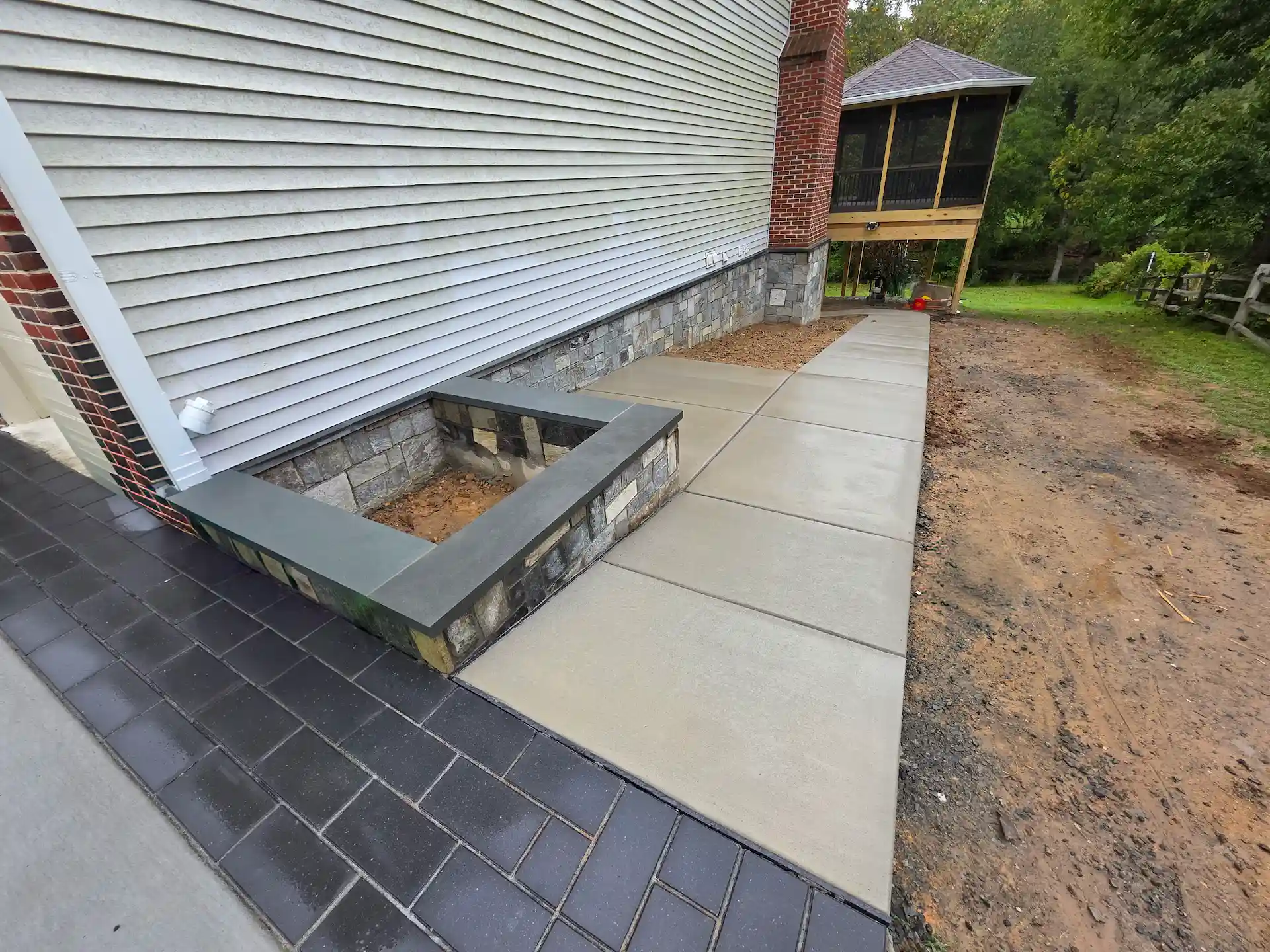
Permanent Garden Beds
Wooden raised beds rot in 5 years. A masonry planter wall lasts a lifetime. We design and build integrated stone and brick planters that soften the hard edges of your patio with greenery or create permanent vegetable gardens. Our structures include proper weep holes for drainage and interior waterproofing to prevent mineral staining.
Integrating permanent planters into a Northern Virginia hardscape elevates the space from a simple stone pad into a lush, three-dimensional outdoor living room. They allow you to bring color, texture, and organic life directly onto your patio or pool deck without the clutter of cheap plastic pots. Whether you are terracing a sloped backyard, creating a natural privacy screen of tall grasses, or building an ergonomic culinary garden, Tuck GC constructs masonry planters engineered to withstand the immense hydrostatic pressure of wet soil.
1. The Diagnostic: Why Wood and Cheap Block Fail
The most common raised garden bed is built from pressure-treated pine or cedar. When wood is in constant, direct contact with wet, biologically active soil, it is only a matter of time before it decays, warps, and blows out. Furthermore, older pressure-treated lumber can leach harsh chemical preservatives directly into the soil—a major concern if you are growing vegetables or herbs for your family.
Alternatively, some homeowners attempt to build planters using dry-stacked "landscape blocks" from a big-box hardware store. Because these blocks are not mortared together and lack a poured concrete foundation, the freeze-thaw cycle of the wet soil inside the planter acts like a hydraulic press. Within a single winter, the walls will bulge outward, separate, and collapse. Even if they hold together, un-waterproofed masonry will pull moisture from the wet soil through the block, creating ugly, white chalky stains on the outside of the wall known as efflorescence.
2. The Tuck Standard Protocol: Planter Engineering
A masonry planter is essentially a four-sided retaining wall. It must be built to hold back thousands of pounds of wet earth while simultaneously managing water drainage. Here is the Tuck GC protocol for permanent planter construction:
- Below-Grade Foundation Execution A permanent structure requires a permanent footer. We excavate the perimeter of the planter and install either a deeply compacted crushed aggregate base or a steel-reinforced concrete footing (depending on the height of the wall). This guarantees the heavy masonry will not settle or sink into the yard over time.
- Structural CMU Core Assembly We build the internal skeleton of the planter box using solid Concrete Masonry Units (CMU block). For taller planters, we drive vertical steel rebar through the blocks and fill the cores with solid concrete. This creates an immovable fortress that can effortlessly withstand the outward pressure of saturated soil.
- Interior Waterproofing Application This is the step amateurs skip. Before any soil goes in, we coat the entire interior surface of the CMU block with a commercial-grade asphalt emulsion or liquid rubber waterproofing membrane. This completely stops moisture from wicking through the block to the outside, preventing structural degradation and eliminating ugly white efflorescence stains.
- Engineered Drainage & Weep Holes Plants will drown if the planter acts as a swimming pool. We install specialized weep holes at the base of the wall. Before adding topsoil, we line the bottom interior with crushed drainage aggregate and geotextile filter fabric. This allows excess rainwater to freely percolate down and exit the weep holes without washing your expensive soil out onto the patio.
- Premium Veneer & Capstone Finishing With the core secured and waterproofed, we apply the exterior finish. We lay premium natural stone, brick, or architectural veneer using high-adhesion polymer mortars. We finish the wall with a custom-cut capstone (flagstone, bluestone, or pre-cast), providing a smooth, level edge that often doubles as secondary seating.
3. Material Science: The Tuck Masonry Planter vs. Alternatives
| Specification | The Tuck Masonry Planter | Cedar/Wood Box | Dry-Stacked Retaining Block |
|---|---|---|---|
| Lifespan | 50+ Years (Permanent Hardscape). | 5 to 7 Years (Rots from moisture). | 3 to 5 Years (Shifts and bulges). |
| Structural Core | CMU block, steel rebar, concrete footer. | Wood screws and corner brackets. | Gravity and plastic connection pins. |
| Waterproofing | Interior asphalt emulsion membrane. | None (Wood absorbs the water). | None (Moisture causes white stains). |
| Chemical Leaching | Zero. Safe for all organic gardening. | High risk if using treated lumber. | Low, but soil escapes through gaps. |
| Drainage System | Engineered weep holes with geotextile filters. | Leaks randomly through rotting gaps. | Washes mud through un-mortared joints. |
4. The Northern VA Factor: Soil Dynamics and ARB Compliance
Building heavy masonry features in Northern Virginia means contending with aggressive soil mechanics. In specific zones like Burke, Springfield, Woodbridge, and Lorton, the native marine clay is highly reactive. When a planter box is built directly on this clay without a proper footer, the entire structure will heave out of alignment during the winter freeze. Our deep-trench foundation protocol entirely neutralizes this threat, anchoring the walls below the reactive soil line.
Aesthetic compliance is equally critical. In premium, master-planned communities across Great Falls, McLean, Vienna, Clifton, and Fairfax Station, Architectural Review Boards (ARBs) demand that any permanent landscaping feature matches the primary residence. Because we utilize CMU block cores, we can apply any custom veneer—whether it is matching the historic red brick of an Alexandria colonial or the rugged fieldstone of a Haymarket estate. Your planter walls will look like an original architectural extension of the home, ensuring swift HOA approval.
5. Masonry Planter Wall FAQ
Absolutely. In fact, masonry planters are vastly superior to treated wood boxes for organic gardening because stone, brick, and our interior waterproofing membranes do not leach harsh chemical preservatives into the soil. Furthermore, an elevated planter built to 24 or 30 inches tall provides incredible ergonomic relief, allowing you to tend your garden without kneeling or bending over.
Not when built to the Tuck Standard. Discoloration (efflorescence) occurs when moisture travels from the wet dirt, through the porous block, and evaporates on the outside, leaving behind white salt deposits. We completely eliminate this by painting the interior of the planter with a thick, impermeable liquid rubber or asphalt waterproofing membrane before the soil is ever added.
Yes, this is one of our most popular designs for patios. By building the planter wall to an ergonomic height of 18 to 21 inches and capping it with a deep, smooth piece of flagstone or bluestone (typically 12 to 14 inches wide), the front edge serves as permanent, wraparound seating for your guests, while the back half holds the soil and greenery.
6. Bring Your Hardscape to Life
A patio without greenery can feel stark and cold. Custom masonry planter walls allow you to seamlessly integrate vibrant landscaping directly into your outdoor living space. Whether you want to frame a beautiful new paver patio in Arlington, build an elevated culinary garden in Centreville, or create a natural privacy screen along a property line in Manassas, Tuck GC delivers permanent structural beauty. Stop rebuilding rotting wooden boxes. Invest in masonry.