
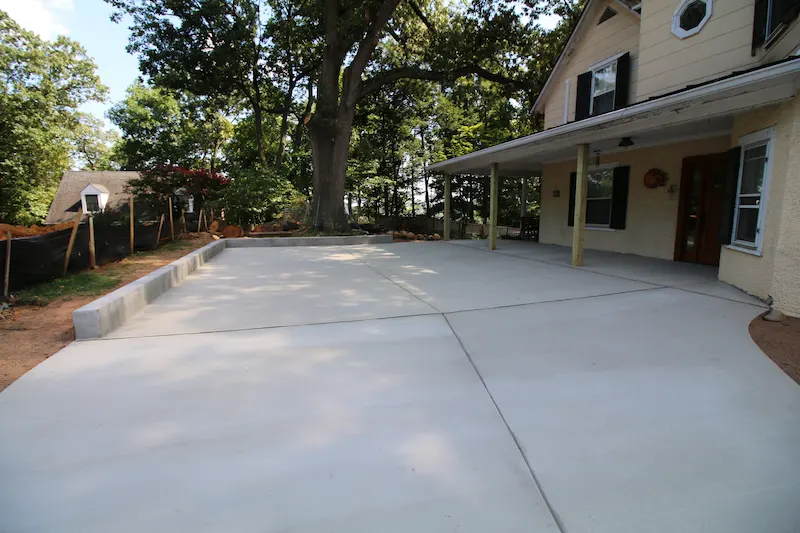
The Diagnosis: The "Morning Car Shuffle"
It is the most annoying ritual in Northern Virginia: waking up 15 minutes early just to move three cars so one person can leave for work. Whether you have teenage drivers, a multi-generational household, or simply more vehicles than your builder anticipated, a single-file driveway is a daily source of friction.
Many homeowners try to solve this by parking on the grass (which kills the lawn and violates HOA rules) or squeezing cars onto the apron (risking VDOT fines). The permanent solution is a Structural Driveway Expansion. We don't just dump gravel; we engineer a seamless extension that looks like it was part of the original home design.
The Widening Protocol: Seamless Integration
Widening a driveway requires more precision than pouring a new one because we must match grades and bond new material to old. Here is the Tuck Standard:
- 1. Zoning & Utility Location Before we dig, we verify "Lot Coverage" ratios. Fairfax County strictly limits how much of your front yard can be paved. We calculate the maximum legal width you can add without triggering a stormwater management violation.
- 2. Excavation & Root Pruning We excavate the widening strip to a depth of 10-12 inches. If we encounter tree roots from nearby landscaping, we cleanly prune them to prevent future heaving, rather than ripping them out and killing the tree.
- 3. The "Dowel" Connection To prevent the new strip from sinking away from the old driveway, we drill into the existing slab and insert steel rebar dowels. This "pins" the new concrete to the old, forcing them to move as one unit.
- 4. Base Compaction We install 6 inches of 21A stone and compact it with a plate tamper. This is critical. If the base under the widening strip settles, your new parking spot will crack and separate within a year.
- 5. Material Matching We can match your existing concrete (using specific aggregate blends) or install a contrasting border of pavers (Cobblestone, Flagstone, or Brick) to turn the widening into a deliberate design feature.
Material Science: Seamless vs. " tacked on"
Why do some driveway additions look like cheap patches while others look like estate entrances?
| Feature | "Cheap Patch" Expansion | Tuck Structural Widening |
|---|---|---|
| Connection | Butt joint (no steel) | Doweled Rebar Connection |
| Settlement Risk | High (Gap opens up) | Zero (Pinned to main slab) |
| Base Depth | 2-3 inches (skimped) | 6 inches Compacted Stone |
| Drainage | Traps water at seam | Graded away from seam |
| Aesthetics | Obvious color mismatch | Paver Border / Matching Mix |
The Northern Virginia Factor: Zoning & HOA
The 30% Rule: Generally, Fairfax County zoning limits front yard coverage. If you pave too much, you create "impervious surface" issues. We know the exact formulas to maximize your parking without triggering a requirement for expensive rain gardens or underground detention tanks.
The HOA Approval: Most HOAs in Burke, Centreville, and Gainesville hate "asphalt wings" added to driveways. However, they almost always approve "Hardscape Borders." By framing your widening project as a "Belgian Block border" or "Paver apron extension," we often get approval where others get denied.
Frequently Asked Questions
Reclaim Your Morning Routine
Stop the stress of the morning car shuffle. Add the space you need with a structural expansion that adds value to your home. It is cheaper than buying a new house with a bigger garage.
Request a Widening Estimate