
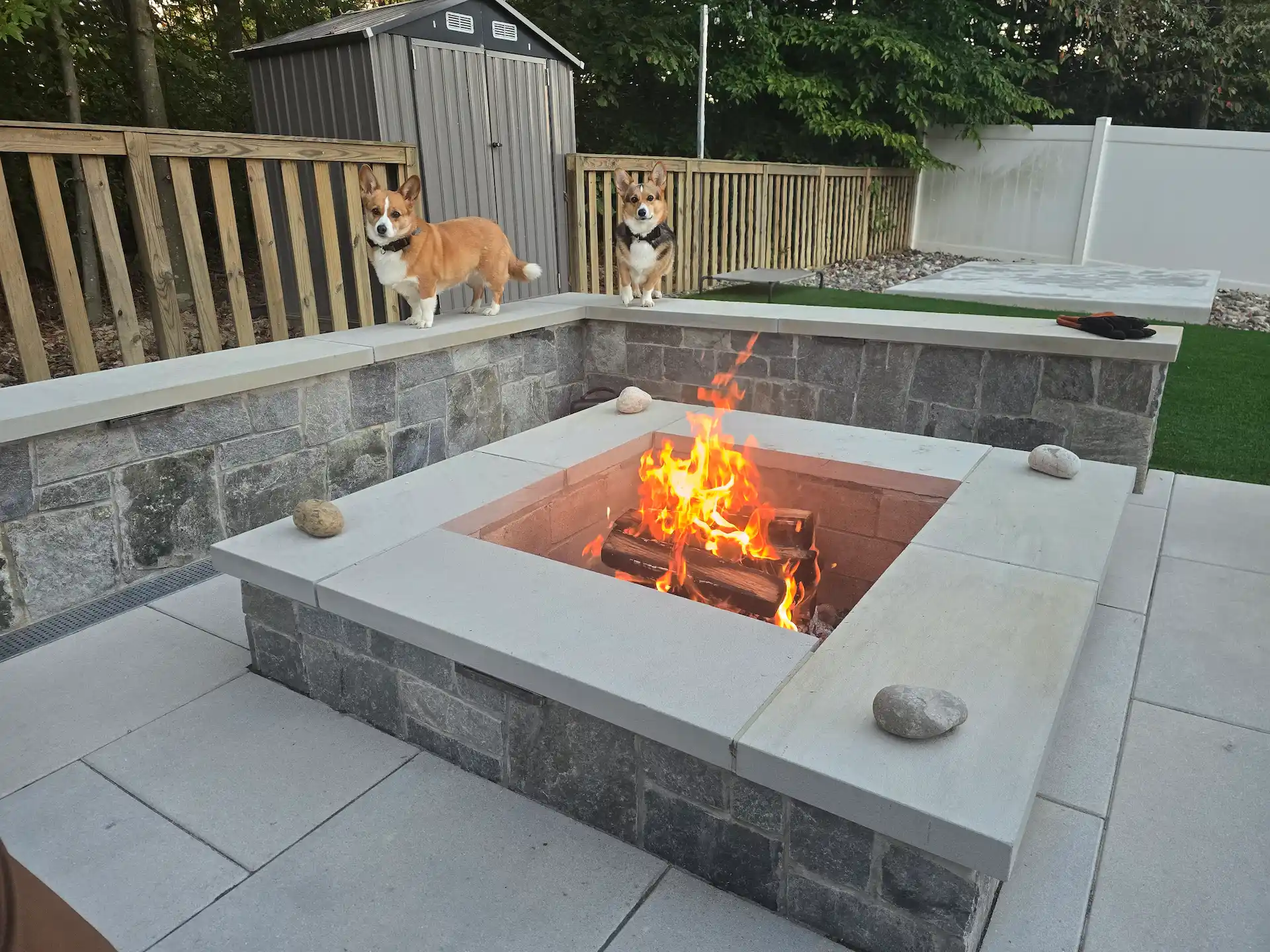
The Gathering Spot
Nothing draws people outside like fire. Whether you want a simple round pit for roasting marshmallows or a grand outdoor fireplace as an architectural focal point, we build masonry features that are safe and durable. We install both wood-burning systems with smokeless steel inserts and convenient natural gas burners for instant ambiance.
However, integrating a permanent fire feature into a Northern Virginia hardscape requires far more than stacking stones in a circle. An outdoor fireplace or built-in fire pit is a structural element subjected to extreme thermal shock—rapid transitions from hundreds of degrees inside the firebox to freezing ambient temperatures outside. Without proper refractory linings, structural core construction, and a deep-trench foundation, the feature will inevitably crack, sink, or become an unmanageable smoke hazard. At Tuck GC, we engineer fire features for safety, efficient combustion, and generational longevity.
1. The Diagnostic: Why Standard DIY & Landscaper Fire Features Fail
The majority of failing fire pits we replace across Fairfax and Prince William counties suffer from three critical flaws: the use of non-refractory materials, a lack of foundational support, and poor airflow dynamics. Many contractors cut corners by assembling pre-cast concrete "kits" using standard mortar or even construction adhesive. When exposed to an open flame, standard concrete and mortar undergo severe thermal expansion, leading to catastrophic spalling (flaking) and deep structural cracking within a single season.
Furthermore, a fire pit without a poured concrete footing or deeply compacted aggregate base will succumb to frost heave during Virginia winters, causing the structure to lean and snap. Finally, if a fire pit lacks engineered cross-ventilation drafts or adequate drainage, it creates an oxygen-starved environment. This results in heavy, choking smoke and a basin that fills with stagnant rainwater, rendering it unusable.
2. The Tuck Standard Protocol: Combustion & Structural Engineering
A Tuck GC fire pit or outdoor fireplace is built from the inside out. We combine traditional heavy masonry techniques with modern heat-shielding technology to create a bulletproof feature.
- Foundational Sub-Base Construction Every fire feature begins below grade. Depending on the size of the structure (from a 36-inch fire pit to a 15-foot chimney), we excavate past the frost line or topsoil layer and install either a heavily compacted crushed aggregate base or a steel-reinforced poured concrete footing to prevent settling and frost heave.
- CMU Block Core Assembly The skeleton of our fire features is built using solid Concrete Masonry Units (CMU block). This creates an unyielding structural core that can support thousands of pounds of natural stone veneer and heavy stone coping without shifting.
- Refractory Shielding & Firebrick Lining The interior firebox is the most critical zone. We line the inner walls with high-density refractory firebrick, laid exclusively with specialized refractory mortar. This heat-resistant barrier absorbs thermal shock and reflects radiant heat upward and outward, protecting the outer CMU core and stone veneer from extreme temperature fluctuations.
- Airflow, Venting & Drainage Integration For wood-burning systems, we core-drill specific ventilation drafts at the base of the structure to feed oxygen to the primary combustion zone, significantly reducing smoke output. We also install weep holes and base drainage layers so rainwater naturally percolates into the subsoil rather than pooling inside the pit.
- Fuel System Customization & Veneer Application Once the core is secure, we integrate your chosen system—whether running a permanent, underground high-BTU natural gas line or installing a heavy-gauge secondary-combustion steel sleeve for a smokeless wood burn. Finally, we face the exterior in premium natural stone (flagstone, fieldstone, or ledgestone) and cap it with custom-cut, heat-resistant coping stones.
3. Material Science: The Tuck Fire Feature vs. Builder-Grade Kits
| Specification | The Tuck Standard Fire Feature | Standard Landscaper / DIY Kit |
|---|---|---|
| Firebox Lining | High-density firebrick with high-temp refractory mortar. | Standard concrete block with regular mortar (cracks easily). |
| Structural Core | CMU block skeleton independent of the outer veneer. | Single-wall construction; exterior stones take direct heat. |
| Water Management | Engineered base drainage and weep holes. | Solid bottom; acts as a bucket holding stagnant rainwater. |
| Airflow Dynamics | Cross-draft ventilation or smokeless steel insert integration. | No lower ventilation; starves the fire, creating excess smoke. |
| Foundation | Excavated deep base or reinforced concrete footer. | Built directly on top of existing patio pavers or topsoil. |
4. The Northern VA Factor: Navigating Zoning & Soil
Building a fire feature in our primary service zones—such as Fairfax County, Arlington, and Alexandria—requires strict adherence to local zoning and fire safety ordinances. In densely populated areas like Arlington and Falls Church, "setback rules" dictate exactly how close an open-flame structure can be to a property line or combustible dwelling. In many cases, a traditional wood-burning fireplace is prohibited near fence lines, making a permitted, hard-piped natural gas fire pit the ideal, code-compliant solution. We handle the gas line trenching and coordinate with licensed plumbers to ensure total compliance.
In more expansive areas like Haymarket, Fairfax Station, Great Falls, and Clifton, we frequently build grand, towering outdoor fireplaces. These require navigating strict Homeowner Association (HOA) and Architectural Review Board (ARB) approvals regarding chimney heights, spark arrestors, and aesthetic matching to the primary residence.
Furthermore, the subterranean environment of Northern Virginia presents its own challenges. The highly expansive marine clay found in Burke, Springfield, and Woodbridge demands that heavy masonry structures, like fireplaces, sit on over-engineered concrete footers. If a 3-ton stone fireplace is built on clay without a proper frost-depth footer, the winter freeze-thaw cycle will heave and fracture the entire structure.
5. Fire Feature Engineering FAQ
Yes, provided your current structure is sound. Converting to gas requires trenching a designated gas line from your home's meter to the fire feature. We then install a stainless steel burner pan, a high-output burner ring (measured in BTUs to ensure massive flame output), and top it with fire glass or ceramic logs. A key valve is installed directly into the masonry for easy, match-lit operation.
A true "smokeless" wood fire pit utilizes secondary combustion. We build a standard masonry fire pit but integrate a specialized, double-walled stainless steel insert. As the fire burns, cool air is drawn into the lower vents of the insert, heated within the double walls, and injected back into the top of the firebox. This super-heated air ignites the smoke particles before they can escape, resulting in a brilliant, intensely hot fire with virtually no irritating smoke.
Standard, low-profile wood-burning fire pits rarely require a permit, provided they meet local property line setbacks. However, large outdoor fireplaces with towering chimneys, and any fire feature requiring a new natural gas line, strictly require municipal permits and inspections. Tuck GC manages the entire permitting process, ensuring your project is 100% legal and safe.
6. Ignite Your Outdoor Living Space
A custom fire feature fundamentally changes how you interact with your backyard, extending your entertaining season deep into the autumn and winter months. Whether you desire the rugged authenticity of a wood-burning stone pit in Lake Ridge or a sophisticated, remote-controlled linear gas fireplace in McLean, Tuck GC has the masonry expertise to execute the vision flawlessly. Stop settling for rusted, temporary metal bowls that ruin your patio. Invest in a structural masterpiece.